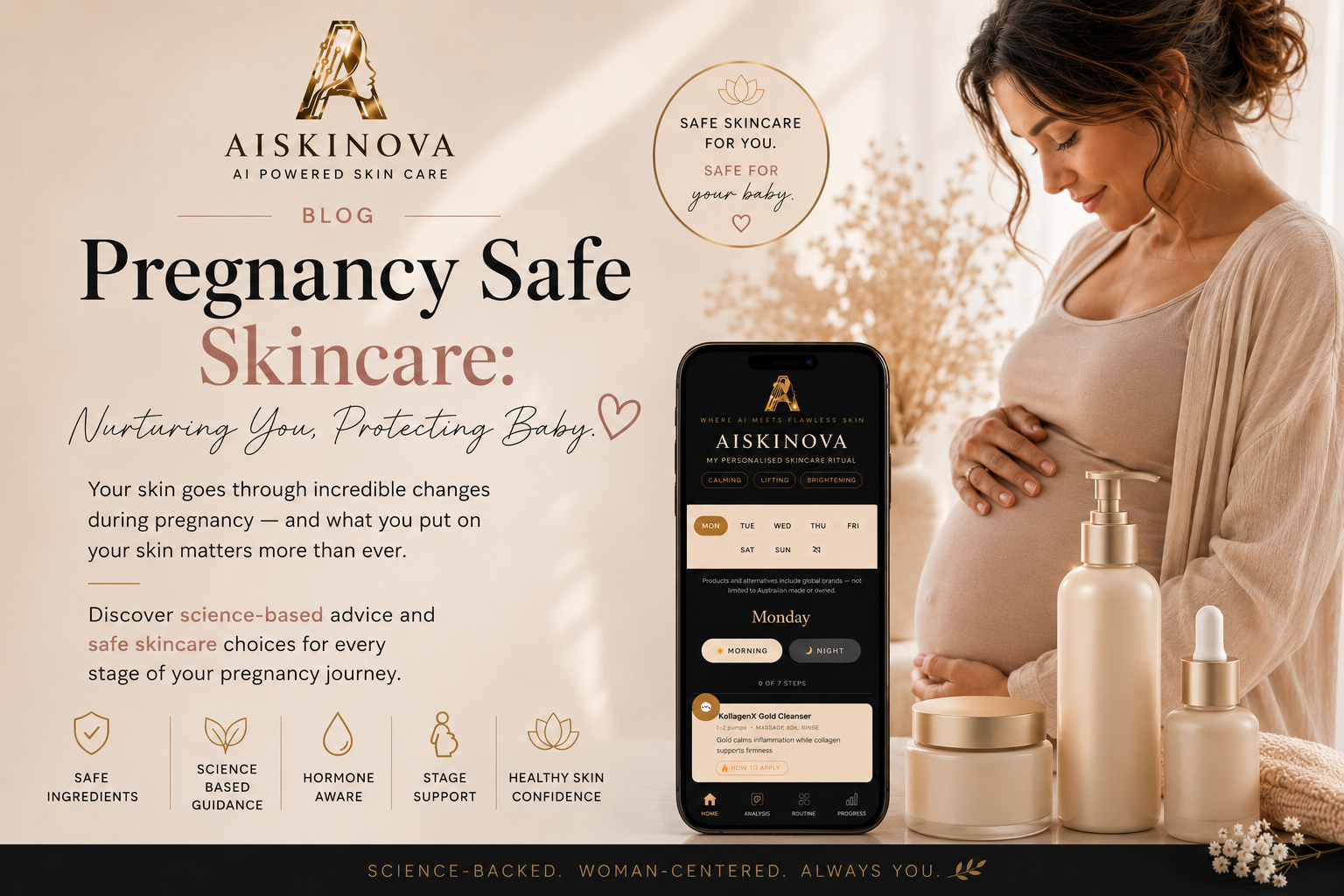
Pregnancy is one of the most significant hormonal events of a woman's life — and your skin registers every stage of it. Surging progesterone, oestrogen, and hCG affect sebum production, pigmentation, barrier function, and sensitivity in ways that are often surprising, especially if your skin was previously predictable.
The bigger challenge is knowing what to do about it safely. Not every skincare ingredient that is effective is safe to use during pregnancy, and the stakes are higher than at any other life stage. This guide explains exactly which ingredients to avoid, which are safe, and how to build a complete AM and PM routine that works — without compromise.
This article is for informational purposes and does not replace medical advice. Always discuss any skincare concerns or product changes with your OB-GYN or midwife, particularly if you have an existing skin condition.
Why It Matters
Why Pregnancy Changes What Is Safe
During pregnancy, the skin's absorption capacity increases and the barrier is more permeable than usual — meaning certain ingredients that would otherwise stay on the surface can penetrate more readily and enter the bloodstream. Some ingredients, when absorbed in sufficient quantities, are known to cross the placental barrier and affect foetal development.
This does not mean skincare is dangerous during pregnancy. The vast majority of ingredients in a standard routine are completely safe. But a small number of commonly used actives carry enough evidence of risk that they are routinely excluded from pregnancy-safe protocols — and knowing which ones they are gives you the confidence to continue caring for your skin without anxiety.
Avoid
Ingredients to Avoid During Pregnancy
Retinoids — All Forms
This is the most important category to remove from your routine. Retinoids include prescription tretinoin, adapalene, tazarotene, and over-the-counter retinol, retinal (retinaldehyde), and retinyl palmitate. All forms of vitamin A in topical skincare are considered unsafe during pregnancy. High-dose vitamin A is a known teratogen — it can cause birth defects — and while the systemic absorption from topical use is far lower than oral supplementation, there is enough evidence of risk that no safe threshold has been established for topical use. Remove all retinoid products for the duration of pregnancy and while breastfeeding.
High-Dose Salicylic Acid
Salicylic acid (a BHA) at concentrations above 2% — including prescription-strength peels and high-concentration spot treatments — should be avoided. At high doses, salicylic acid is associated with complications including foetal salicylate toxicity. Low-concentration salicylic acid (0.5–2%) in rinse-off cleansers is generally considered lower risk, but many dermatologists recommend avoiding it entirely as a precaution. Azelaic acid is a safe and highly effective alternative for acne and congestion.
Hydroquinone
Hydroquinone is used to treat hyperpigmentation and melasma. It has high systemic absorption rates — studies suggest up to 35–45% of applied hydroquinone is absorbed — making it one of the few topical ingredients where systemic exposure is genuinely significant. Avoid during pregnancy. Azelaic acid, vitamin C, and niacinamide are all safe and effective alternatives for managing pregnancy-related pigmentation.
Oxybenzone and Octinoxate (Chemical SPF Filters)
These chemical UV filters have demonstrated hormonal disruption activity in studies and are detectable in cord blood. While the evidence in humans is not conclusive, most pregnancy-safe skincare protocols recommend switching to a mineral SPF (zinc oxide and/or titanium dioxide) for the duration of pregnancy. Physical mineral SPFs sit on top of the skin rather than absorbing into it and have no known systemic absorption concerns.
Formaldehyde-Releasing Preservatives
Ingredients including DMDM hydantoin, diazolidinyl urea, imidazolidinyl urea, and quaternium-15 slowly release formaldehyde as a preservative mechanism. Formaldehyde is a known carcinogen. While the concentrations in cosmetics are low, these preservatives are worth avoiding during pregnancy when alternative-preserved products are readily available. Check INCI lists carefully — these ingredients are commonly found in lower-cost hair care and body products.
Benzoyl Peroxide
The evidence on benzoyl peroxide in pregnancy is mixed. Some practitioners consider low concentrations (2.5%) acceptable for localised spot use, while others recommend avoiding it entirely due to limited safety data. Given that azelaic acid is a proven, pregnancy-safe alternative for acne, it is simplest to replace benzoyl peroxide rather than weigh uncertain risk.
Safe to Use
Ingredients That Are Safe During Pregnancy
Hyaluronic Acid
One of the safest and most effective hydrating ingredients available. Hyaluronic acid molecules are too large to penetrate beyond the upper layers of the skin — there is no systemic absorption — and they draw moisture to the skin surface. Safe throughout pregnancy and breastfeeding.
Niacinamide
A form of vitamin B3 with an exceptionally broad range of benefits: it regulates sebum production, reduces pigmentation, strengthens the barrier, minimises pore appearance, and has anti-inflammatory properties that make it excellent for pregnancy-related acne and sensitivity. Niacinamide is considered safe at all concentrations typically found in skincare (2–10%).
Vitamin C (L-Ascorbic Acid and Derivatives)
Topical vitamin C is safe during pregnancy and particularly useful for managing the melasma (chloasma) that frequently develops during pregnancy due to hormonal melanin stimulation. It brightens, supports collagen synthesis, and provides antioxidant protection. Use in the morning, always layered under SPF.
Azelaic Acid
Azelaic acid is classified as pregnancy category B — it has not been shown to cause harm to a developing foetus in animal studies, and no adequate human studies have demonstrated risk. It is one of the few actives that addresses both pregnancy acne and melasma simultaneously. It inhibits tyrosinase (the enzyme responsible for melanin production) and has antibacterial properties that make it an excellent replacement for both hydroquinone and benzoyl peroxide during pregnancy.
Glycolic and Lactic Acid (Low Concentration)
AHAs including glycolic acid and lactic acid at concentrations used in leave-on products (5–10%) are generally considered safe during pregnancy. They help with the cell turnover slowdown and texture changes that can occur as skin adjusts to hormonal shifts. Avoid high-concentration peels. Lactic acid has the added benefit of being a humectant as well as an exfoliant, making it particularly well-suited to the dry skin common in the first trimester.
Ceramides and Peptides
Ceramides are naturally occurring lipids that maintain barrier function — they have no systemic absorption and are safe throughout pregnancy. Peptides (signal peptides like matrixyl, palmitoyl pentapeptide) are similarly safe and support collagen and elastin production without the teratogenic risk associated with retinoids. They are the primary retinoid replacement for structural skin support during pregnancy.
Mineral SPF (Zinc Oxide and Titanium Dioxide)
Physical mineral sunscreens are the preferred SPF choice during pregnancy. Zinc oxide and titanium dioxide sit on the surface of the skin, reflect UV radiation, and have no known hormonal activity or systemic absorption. They are often better tolerated by pregnancy-sensitised skin than chemical alternatives. Look for SPF 50+ broad-spectrum formulations. This is non-negotiable — UV exposure is the primary driver of melasma, and SPF is the most effective prevention available.
Glycerin and Squalane
Both are safe, effective emollients and humectants with no known risks during pregnancy. Glycerin is water-attracting; squalane (a stable, plant-derived version of skin's natural squalene) provides lipid replenishment without clogging pores. Both are useful for managing the increased dryness many women experience in the first trimester.
Quick Reference
Ingredient Summary
| Ingredient | Status | Safe Alternative |
|---|---|---|
| Retinol / Retinal / Tretinoin | Avoid | Peptides, Bakuchiol |
| Salicylic Acid >2% | Avoid | Azelaic Acid |
| Hydroquinone | Avoid | Niacinamide, Vitamin C, Azelaic Acid |
| Oxybenzone / Octinoxate | Avoid | Zinc Oxide / Titanium Dioxide SPF |
| Benzoyl Peroxide | Caution | Azelaic Acid |
| Formaldehyde-releasing preservatives | Avoid | Check INCI list |
| Hyaluronic Acid | Safe | — |
| Niacinamide | Safe | — |
| Vitamin C (topical) | Safe | — |
| Azelaic Acid | Safe (Category B) | — |
| Glycolic / Lactic Acid (low %) | Safe | — |
| Ceramides | Safe | — |
| Peptides | Safe | — |
| Zinc Oxide / Titanium Dioxide SPF | Safe (preferred) | — |
| Glycerin / Squalane | Safe | — |
The Routine
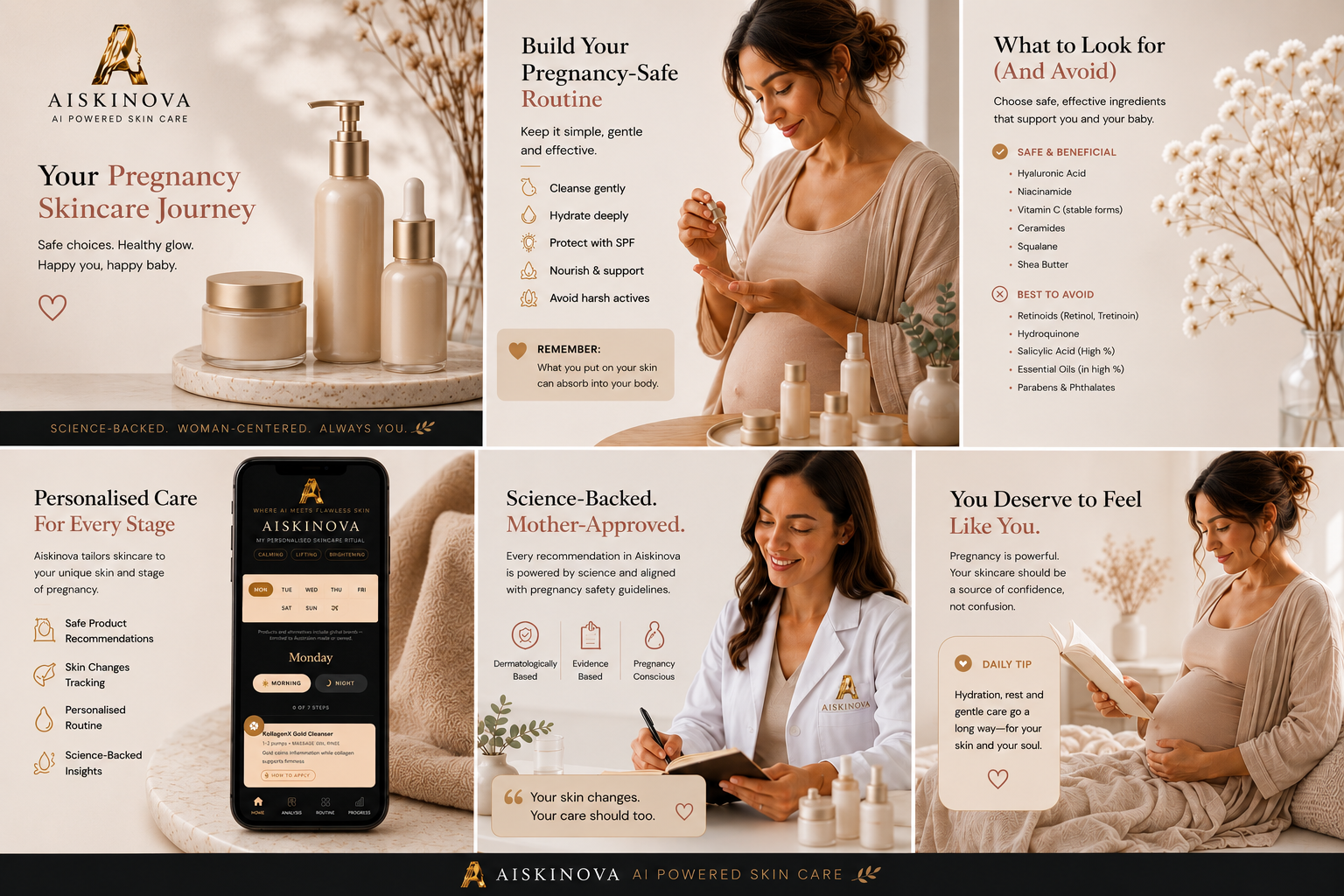
Your Pregnancy-Safe AM Routine
Step 1 — Gentle Cleanser
A cream or gel cleanser with no salicylic acid, glycolic acid, or benzoyl peroxide. Look for ceramide-containing or barrier-supportive formulas — pregnancy can make skin more sensitive to stripping, and you want your barrier intact for everything that follows.
Step 2 — Hydrating Toner or Essence
Hyaluronic acid serum or a hydrating essence applied to damp skin. This locks in moisture before anything else is applied and is particularly important if you are experiencing first-trimester dryness or third-trimester tightness.
Step 3 — Vitamin C Serum
Apply a stable vitamin C serum to target melasma and provide antioxidant defence. If your skin is sensitive, ascorbyl glucoside or sodium ascorbyl phosphate are gentler alternatives to L-ascorbic acid and remain effective over time.
Step 4 — Niacinamide (if needed)
If you are experiencing pregnancy-related breakouts, congestion, or pigmentation, add a niacinamide serum. If you are using azelaic acid in the PM, you may not need niacinamide AM — avoid doubling up actives unnecessarily.
Step 5 — Moisturiser
A ceramide-rich moisturiser appropriate for your skin type. Do not skip moisturiser even if your skin is oily — progesterone increases sebum production in the second trimester, but the skin barrier still needs lipid support.
Step 6 — Mineral SPF 50+
The most important step of your entire routine during pregnancy. Zinc oxide-based SPF reduces melasma development, prevents UV-triggered inflammation, and protects the skin barrier. Apply generously and reapply every two hours if outdoors. This single step does more for pregnancy skin than any treatment product.
Your Pregnancy-Safe PM Routine
Step 1 — Double Cleanse (if you wore SPF or makeup)
A cleansing balm or micellar water to remove SPF and makeup, followed by your regular gentle cleanser. Micellar water alone is not sufficient to remove mineral SPF — the physical particles need mechanical removal. Double cleansing is particularly important because mineral SPF residue left overnight can contribute to congestion.
Step 2 — Hydrating Toner or Essence
Same as AM — hyaluronic acid to prep and plump the skin before actives.
Step 3 — Azelaic Acid (for acne or pigmentation)
If you are dealing with pregnancy breakouts or melasma, azelaic acid at 10–20% applied at night is your primary treatment active. It does the work that benzoyl peroxide, salicylic acid, and hydroquinone each handle separately — and it is safe. Apply after your toner and before your moisturiser. Some mild tingling on first application is normal and usually settles within one to two weeks.
Step 4 — Peptide Serum (retinol replacement)
A peptide serum used in the PM replaces retinol's role in collagen stimulation and cell renewal. Results are gradual — peptides do not work as quickly as retinoids — but they support skin architecture without any of the risk. Look for products with palmitoyl pentapeptide-4 (Matrixyl), copper peptides, or argireline.
Step 5 — Moisturiser
A richer formulation than your AM if your skin is dry, or the same formula if your skin is balanced. Pregnancy often shifts skin type — skin that was oily pre-pregnancy can become drier, and vice versa. Adjust your moisturiser based on how your skin is behaving now, not how it behaved before.
AISKINOVA
How AISKINOVA Handles Pregnancy
When a user selects pregnancy or postpartum as their current life stage in AISKINOVA, the entire ingredient scoring and recommendation system applies a clinical safety filter automatically:
- Retinoids are hard-blocked from all recommendations — no retinol, retinal, or retinyl palmitate will appear in any suggested product
- The product check tool flags any product containing pregnancy-unsafe ingredients instantly, with clear explanation of why the ingredient is flagged
- Azelaic acid is recommended specifically as the primary active for both acne and pigmentation treatment
- SPF recommendations default to mineral-only formulations
- The routine builder prioritises barrier support and hydration before any treatment steps
- Fragrance and formaldehyde-releasing preservatives are flagged in product scoring
The goal is to remove the burden of ingredient research from a time when there is already a great deal to think about. AISKINOVA handles the safety layer so that the routine you receive is already filtered — you can focus on using it, not auditing every product yourself.
The Key Takeaway
Building a pregnancy-safe skincare routine is not about drastically simplifying what you do — it is about knowing which specific ingredients to swap out and why. The vast majority of a well-formulated routine transfers across intact. The key removals are retinoids, high-dose salicylic acid, hydroquinone, and chemical UV filters. The key additions are azelaic acid, mineral SPF, and peptides.
Your skin during pregnancy is doing something remarkable. It deserves a routine that supports it — safely, effectively, and without compromise.
Let AISKINOVA Build Your Pregnancy-Safe Routine
Select pregnancy as your life stage and AISKINOVA automatically filters every recommendation for safety — building your personalised routine with ingredients that are effective and appropriate for where you are right now.
Start Free Analysis →